Showing posts with label ENTERTAINMENT. Show all posts

Wednesday, November 12, 2014

Only Beyonce Could Turn The Eiffel Tower Into Merely The Backdrop Of A Family Portrait

I'd recognize these silhouettes anywhere. But the background? Hmmm looks vaguely familiar I guess.
Beyonce may not be that into Twitter, but she is definitely the queen of Instagram. Just take a look at this photo of one of the most photographed, touristy spots in the world—The Eiffel Tower. Was Beyonce content to post a picture of the iconic La Tour Eiffel? Nah. Instead, she turned it into one of the most legitimately beautiful, intimate portraits of her family that we’ve seen yet.

Rick Ross And Jay Z Are At It Again: Listen To ‘Movin’ Bass’

The two heavyweights team up once again.
Rick Ross and Jay Z have quite a history together, and they added to that history on Tuesday (November 11) with their new song, “Movin’ Bass.”
The Timbaland-produced track is a pounding play on words, as it references both selling music (bass) and drugs (base). Hov handles the hook duties and doesn’t kick a verse — like he has on previous collabs — but instead leaves that to Rozay, whose gruff flow carries the track.
“Grammy-nominated once, but I’m still moving bass,” Ricky raps, before Jay adds his chorus: “Record jumping out the store, still moving bass.”
What do you think? How does this compare to their past work, like “Maybach Music,” “F–kWithMeYouKnowIGotIt” and “Free Mason”?

The song will be included on Ross’ upcoming album, Hood Billionaire, due out November 24.

Tuesday, November 11, 2014

Matt Damon confirms Bourne return


Years of rumours were finally put to bed recently when news broke that Matt Damon and Paul Greengrass would be reuniting for another Bourne film, and now Damon himself has confirmed that it's all systems go for the next instalment of the action franchise.

It had seemed that any such reunion was unlikely, particularly after Jeremy Renner had been drafted in to take the series in a new direction, but now Damon has confirmed that Jason Bourne will be taking centre stage once more.

“Yes, next year,” said Damon, when asked by E! Online whether he would be shooting a new Bourne film. “It’ll be in 2016 when the movie will actually come out.”

“Paul Greengrass is going to do another one and that’s all I ever said,” continues the star. “I just needed him to say ‘yes’.”

Universal has yet to confirm an official release date for the film, but with cameras set to roll next year, and 2016 pencilled into the slate, it looks like we won’t have too long to wait to see Bourne taking names and snapping necks once more

Friday, September 5, 2014

Kidman memory loss movie buoys author SJ Watson


Nicole Kidman in Before I Go To Sleep Nicole Kidman plays the tortured Christine who relies on a video diary to try to make sense of her life
Letting Hollywood loose on a best-selling novel is a risk for any author. If the film is panned, the most obvious dangers are alienating established fans and potentially putting off new readers.
Yet contemporary book-to-screen adaptations are coming thick and fast. The Fault in Our Stars, The 100-year-old Man who Climbed out of the Window and Disappeared and the forthcoming Gone Girl are just some examples.
The latest is memory loss thriller Before I Go To Sleep, the debut novel by Steven "SJ" Watson, which has sold more than four million copies and been published in more than 30 countries.
It's the story of Christine, a 47-year-old woman with a rare form of amnesia which causes her to lose all memory, even of the previous day's events, when she wakes up. Her condition is the result of a car accident 20 years before, or so she (and we) are told by her husband, Ben.
Each day, Christine wakes believing she's still in her 20s, and has to go through the trauma of acknowledging her true age and appearance. And Ben has to explain her life to her again and again.
Steve Watson SJ Watson took a hands-off approach to the film-making process
But as the story unfolds, it becomes clear all is not what it seems, as Christine learns by way of the diary she discovers she is keeping and the help of the doctor she is secretly seeing to help restore her memory.
Nicole Kidman plays Christine, while Colin Firth plays Ben and Mark Strong is the doctor.
It would be easy to suspect part-time NHS audiologist Watson's motives were largely pecuniary when handing over the film rights to director Rowan Joffe. But, movies and money were the last thing on his mind, says Watson - preoccupied as he was with getting his book onto the shelves.
"I was totally daunted by it, it was so surreal.
"I wrote the book just hoping people would like it. Film had been mentioned by my agent even though people were careful not to raise my hopes. So, I was delighted it had elicited such a robust response."
Colin Firth and Nicole Kidman in Before I Go To Sleep Colin Firth as husband Ben increasingly becomes an added worry for Christine
Any doubts Watson may have had about a film were dispelled on meeting Joffe - the director seemed to know more about the book than Watson himself.
"He'd already done a huge amount of work. He was telling me all about his ideas and things I hadn't even noticed about the story and characters," says the author.
"He recognised it wasn't just a thriller but a real drama with the opportunity to play with the audience's expectations. The audience is in the same head space as Christine and subject to the same revelations she is and at the same time."
line
Nicole Kidman on playing Christine The challenge was playing someone who doesn't know who they are or who they are married to. How do you play that and make it authentic and truthful?
And I love great twists and am drawn to psychological thrillers. But they are few and far between. Studios don't want to make them - they want to make films like Guardians of the Galaxy.
It's not left a lasting impression. I've played harrowing roles before and I've always been able to morph into a particular state of mind and then shed it.
It was refreshing to be less glamorous and more raw. I'm always looking for different things as I don't want to be pigeonholed. I was about 10 minutes in the make-up chair - a dream. I can't stand sitting there, that's why I've never done a special effects movie.
Colin Firth is lovely, committed and a brilliant actor, which is why it's great to see him doing something so different but it was also distressing - for both of us. We have the same humour and he's tall, so I get to look up to him!
As for the subject of memory, as you get older it gets foggier. Remembering scripts does get harder. Learning lines I notice I have to really work my brain and it now takes much longer, I used to be able to learn a page just by reading it once. My memory for numbers though is phenomenal.
If I couldn't learn lines any more I'd write, short stories and screenplays. I've always written, since I was a child. But publishing anything just doesn't interest me.
line
Watson deliberately didn't involve himself in the making of the movie.
"I decided early on that my job was to make sure the story was in the right people's hands and then to stand back," he says.
"If I started picking at things, like the colour of Christine's hair or the age of the cast, I could ruin everything. Unless they were going to do something I considered totally wrong, it needed to be Rowan's vision and project.
"The other thing was that I'd heard so many stories of authors who had had films made of their books and been disappointed. So, I thought, if it did turn out to be rubbish, I wouldn't have had anything to do with it. But if it were great I could take some of the credit."
Before I Go To Sleep Mark Strong as Dr Nasch was an intriguing choice for a role that sees him playing against his 'tough guy' type, says the author
With such a hands-off approach, it's lucky Watson is happy with the adaptation and casting, especially Kidman.
"My first thought was that she was a very versatile actor, having done so many roles so I thought yes, she can do this. I went out and rented all the movies with her that I could. The Others and Rabbit Hole stood out and I could just see her as Christine after that. She does dark thriller roles really well."
One stumbling block could have been Kidman's characteristically glamorous and youthful appearance, since Watson's Christine is unable to maintain either. But this has been dealt with well, says the author.
"A worry would be if she [Kidman} had insisted on looking beautifully made up with perfect hair and so on but that's not the case. The character in the book is older than Nicole, but I think it all works well. It would have been wrong to put Nicole in ageing prosthetics."
As for Firth and Strong, Watson says they were an inspired choice. Without giving too much away, suffice to say both play roles that go against type.
"I was excited about the casting. Firth in particular will be a shock to the audience. But he's very nuanced and he plays that role really well. I imagine he was pleased to have the opportunity to play a different kind of role and it's not as if he has to take jobs to pay the mortgage," says Watson.
Watson cites Fight Club as one of his favourite book to film adaptations. But he doesn't feel the current trend for remakes and adaptations is necessarily a good thing.
Nicole Kidman in Before I Go To Sleep Nicole Kidman presents a much pared-down image in Before I Go To Sleep
"If that is the case, it's a shame because there could be a really interesting screenplay out there that would not necessarily make a great novel," says Watson.
"If it's a sign of an industry that is becoming more risk-averse, in that it is less likely to take something that doesn't have a proven track record, that's a real shame too.
"And if turnover gets more speedy then people aren't going to get the chance to read the books."
But Watson himself is adamant he won't allow the movies to cloud his future vision.
"I've just written my second book and I told myself that if I started thinking: 'Will this make a good film', it would pile on more pressure and probably take any creativity away.
"You're on a hiding to nothing, you're coming at writing from an impure place. The story has to come first. Trying to insert things like car chases that would work on screen would make things messy.
"My job is as a novelist and if someone reads my work and thinks they want to put it on the big screen, that's great. But if they don't, that's great too."

Comedian Joan Rivers dies aged 81


Her career took in highs and lows but she still performed in her 80s, as David Sillito reports
Comedian and TV host Joan Rivers has died, her daughter has said.
Rivers, 81, had been on life support in Mount Sinai Hospital since having a cardiac arrest in New York last week.
In a statement, her daughter Melissa said she died surrounded by family and friends, and she thanked hospital staff for their "amazing care".
The comedian, best known for her lacerating wit, stopped breathing during a procedure on her vocal cords at an outpatient clinic last Thursday.
"My mother's greatest joy in life was to make people laugh," said Melissa Rivers.
"Although that is difficult to do right now, I know her final wish would be that we return to laughing soon."
The actress and stand-up comedian is well known for her legendary put-downs and has more recently turned her razor-sharp tongue on the red carpet's worst dressed celebrities, hosting the E! network's Fashion Police.
Both Rivers and Melissa, her only child, have appeared together in reality TV show Joan & Melissa: Joan Knows Best?
Joan Rivers Melissa Rivers, right, with mother Joan and co-host Kelly Osbourne on Fashion Police
Joan Rivers in 1965 Joan Rivers in 1965, the year of her big break
She didn't just fire her barbs at others, however. She was always prepared to joke about herself, and in particular her plastic surgery.
In 2010, she tweeted a joke about her death, saying: With all the plastic surgery I've had I'm worried that when I die, God won't recognise me!
Shortly after her death was announced, tributes poured in from the world of entertainment.
US talk show host David Letterman called Rivers "a real pioneer for other women looking for careers in stand-up comedy".
He recalled her guest spots on his show, saying: "She would come out here and sit in this chair and say some things that were unbelievable.
"But it was hilarious… the force of her comedy was overpowering," he added.
On his show, Jimmy Fallon said: "We loved her. We will definitely miss her," while veteran TV interviewer Larry King said: "We will never see her like again."
Comedian and actress Whoopi Goldberg tweeted: "My friend Joan Rivers has passed away once again to quote Billy Crystal... There are no words. Bon Voyage Joan."
TV show host Ellen DeGeneres also described Rivers as a pioneer, adding: "She paved the way for a lot of comedians. I'm very sad she's gone."
Joan Rivers on the Tonight show with Jimmy Fallon Joan Rivers was a talk show regular during her career
Kelly Osbourne and Joan Rivers Kelly Osbourne paid tribute to Joan Rivers as 'the only grandmother I ever knew'
Lena Dunham, writer and star of sitcom Girls, said: "Watching Joan Rivers do stand-up at age 81 was incredible: athletic, jaw-dropping, terrifying, essential. It never stopped. Neither will she."
Comedian Sarah Silverman said: "My heart is torn in half. She wasn't done."
Kelly Osbourne, who appeared with Rivers on her TV show Fashion Police, said she was "my teacher, therapist, closest friend, inspiration and the only grandmother I ever knew."
The Prince of Wales also paid tribute to Rivers, who attended his wedding to the Duchess of Cornwall in 2005 and performed at a gala for the Prince's Trust on his 60th birthday.
"Joan Rivers was an extraordinary woman with an original and indefatigable spirit, an unstoppable sense of humour and an enormous zest for life. She will be hugely missed and utterly irreplaceable," he said.
Controversial She was born Joan Alexandra Molinsky in Brooklyn, New York, to a family of Jewish immigrants who had fled the Russian Revolution.
Her big break came in 1965 when she appeared on The Tonight Show Starring Johnny Carson, and a long television career followed.
However, her mentor Carson never spoke to her again after she landed her own, short-lived late-night talk show on Fox.
Her stand-up act took no prisoners and her comments often proved controversial.
Following the 2013 Academy Awards, at which British singer Adele performed her Oscar-winning Bond theme Skyfall, Rivers joked about the singer's weight on The Late Show with David Letterman.
"She was very scared because she was singing at the awards," said Rivers. "She kept saying, 'My throat, my throat - I don't know if I can swallow.' And I said, 'Oh, yeah! You can swallow.'"
Last month, she was criticised for a rant on the Israeli-Gaza crisis, after suggesting to a TMZ reporter that the Palestinians were to blame for the conflict.
Her first marriage lasted only six months but her second with Edgar Rosenberg spanned more than two decades until his suicide in 1987.

Tuesday, September 2, 2014

The Great Naked Celebrity Photo Leak of 2014 is just the beginning


There will always be another leak, because there is always curiosity in the bodies of nude celebrity women. There is always danger in being an Other
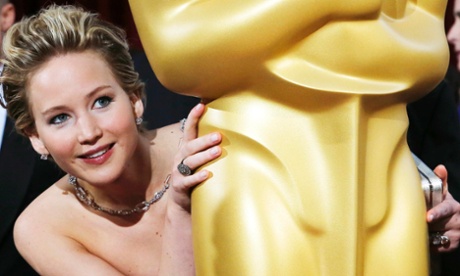
naked jennifer lawrence
BREAKING: beneath their clothes, celebrities are naked – even Jennifer Lawrence Photograph: ADREES LATIF/REUTERS
Privacy is a privilege. It is rarely enjoyed by women or transgender men and women, queer people or people of color. When you are an Other, you are always in danger of having your body or some other intimate part of yourself exposed in one way or another. A stranger reaches out and touches a pregnant woman’s belly. A man walking down the street offers an opinion on a woman’s appearance or implores her to smile. A group of teenagers driving by as a person of color walks on a sidewalk shout racial slurs, interrupting their quiet.
For most people, privacy is little more than an illusion, one we create so we can feel less vulnerable as we move through the world, so we can believe some parts of ourselves are sacred and free from uninvited scrutiny. The further away you are from living as a white, heterosexual, middle-class man, the less privacy you enjoy – the more likely your illusions of privacy will be shattered when you least expect it.
For celebrities, privacy is utterly nonexistent. You are asked intrusive questions about your personal life. You can be photographed at any moment. Your family is investigated, photographed or harassed daily – parents, children, sometimes even siblings also losing any semblance of privacy simply because you share the same blood or name. Celebrity is, in some ways, an infection that is only marginally beneficial.
We’re not going to cry for celebrities, of course, not really. When you choose that life, you must sacrifice certain dignities for the privilege of fame, of fortune. For the most part, these intrusions or privacy are all in good fun, fodder for gossip magazines and websites – because ... celebrities, they’re just like us! They go to the grocery store! They drink coffee! They wear sweatpants! Celebrities are just like us until they aren’t, until such intrusion involves the celebrity woman’s body, in intimate poses, splayed across the internet for delectation and debauchery and debate.
On Sunday, a user on 4chan made good on a promise made several days ago and leaked nude and otherwise revealing photos of Jennifer Lawrence, Lea Michele, Kate Upton, Kirsten Dunst, Hope Solo and other famous young women. This leak is likely only the beginning. Because there will always be another leak, because there is an insatiable curiosity when it comes to the nude celebrity woman’s body. She puts herself in the public eye and, in turn, we are entitled to see as much of her as we so desire, or so I am sure the justification goes.
It goes without saying that there aren’t many nude photos of men being released. Men are largely free to bare their bodies as they choose without repercussion, unless, as is the case of Dave Franco with Allison Brie and Justin Verlander with Upton, the man happens to be in a picture with a young woman, collateral damage.
It’s not clear what the people who leak these photos hope to achieve beyond financial gain and a moment of notoriety. I suppose such impoverished currency is enough. The why of these questions is hardly relevant. These hackers are not revealing anything the general public does not already know. BREAKING: beneath their clothes, celebrities are naked.
What these people are doing is reminding women that, no matter who they are, they are still women. They are forever vulnerable.
The racy images of these nubile bodies are the biggest story on the internet, and every site that refuses to reprint the images has already left itself absolved while leaving a prurient trail of breadcrumbs. The permanency of such violation is a bitter thing. These leaked images are instantly widely available and they always will be. The images will be downloaded and viewed and shared. These women’s lives and their private choices will be dissected. They are women, so they must be judged.
Revealing nonconsensual nudes of the famous female body is not new. In 1983, Vanessa L Williams was the first black woman crowned as Miss America. She had little time to enjoy her achievement, however, because Penthouse published naked pictures of her, and she was forced to relinquish the crown. Williams has gone on to a successful career in film and television, but her biography will always have this footnote. She will always be reminded of the time someone decided to put her in her place because she had the audacity, as a woman, to rise too far.
Nor is this exploitative exposure of women’s naked bodies an issue that only famous women must deal with. Celebrities are just like us after all. This practice is so pervasive that it even has its own name – revenge porn, nude photos and explicit videos unleashed on the internet, most often by disgruntled ex-lovers. There are websites and online forums dedicated to this pernicious genre. Lives have been, if not ruined, irreparably harmed, because we are a culture that thrives on the hatred of women, of anyone who is Other in some way, of anyone who dares to threaten the status quo.
The Great Celebrity Naked Photo Leak of 2014 – or perhaps we should call it The Great Celebrity Naked Photo Leak of August 2014, given that this happens so often that there won’t be only one this year – is meant to remind women of their place. Don’t get too high and mighty, ladies. Don’t step out of line. Don’t do anything to upset or disappoint men who feel entitled to your time, bodies, affection or attention. Your bared body can always be used as a weapon against you. You bared body can always be used to shame and humiliate you. Your bared body is at once desired and loathed.
This is what we must remember. Women cannot be sexual in certain ways without consequence. Women cannot pose nude or provocatively, whether for a lover or themselves, without consequence. We are never allowed to forget how the rules are different girls. I suppose we should be grateful for this latest reminder.

Saturday, August 30, 2014

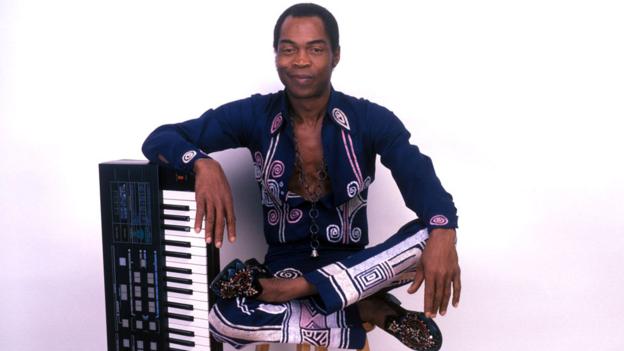
Fela Kuti: Africa’s Bob Marley – or an African Handel?


(Lewton Cole/Alamy)
(Lewton Cole/Alamy)
Fela Kuti found fame in Africa in the ‘70s – but at the time it eluded him elsewhere. As new audiences discover his music, Peter Culshaw looks back at the complex character.
When I met Fela Kuti, the self-styled “Black President”, he was in a London hotel wearing only a pair of red underpants, smoking a massive joint, surrounded by three of his wives (he notoriously married 26 in one day) and his personal magician, a Ghanaian who called himself Professor Hindu. This was in 1984, and was the first interview I ever had published. At the time, Fela was a cult figure in the UK and I was working on one of the few articles about him. Back in Nigeria and the rest of West Africa, though, he had been a major figure for well over a decade; when he died Lagos came to a standstill after a million people turned up to his funeral.
Fela died of an Aids-related illness in 1997, and it seems that every year since then his profile outside Africa has been steadily increasing. Barely a month goes by without new re-releases of his music. Next month sees yet another box set,  this time selected by Brian Eno, a musical pioneer himself – as well the producer of U2, Coldplay and Talking Heads – who says he has played his music more than any other artist. He has also said:“I thought it was the music of the future in 1972 and I still do.”
Fela’s music – or  the Afrobeat genre that he founded – can be heard in lofts in fashionable Dalston in London or Williamsburg in New York, and current popular indie artists like Vampire Weekend, Franz Ferdinand and Damon Albarn have acknowledged a musical debt to him. Albarn has worked with Tony Allen, the original drummer in Fela’s Africa 70, who continues to release albums.
Fela’s crossover to a mainstream Western audience was boosted by the musical Fela! which ran in London and Broadway in 2010. And now there’s a feature film – Finding Fela – directed by Academy Award-winner Alex Gibney, which is showing in a few cinemas in the US and rolls out in Europe and beyond in September.  As a musician and social activist, he is increasingly being compared with Bob Marley.
Band on the run?
Since the early 1970s, Fela and his bands Africa 70 and, later, Egypt 80 built up an audience in Nigeria and elsewhere in Africa. People were drawn to the revolutionary politics of his music, with songs like ITT (International Thief Thief), which attacked multinational corporations and Zombie, which parodied the mindless military types who unquestioningly followed orders. In the course of his life he was arrested more than 100 times, imprisoned and beaten. Like Bob Marley, he was a man of the people, with a strong  political agenda.
But it was as a musical revolutionary that he became a talismanic figure for fellow artists. In Gibney’s film, Paul McCartney recounts how he saw Fela’s band when recording Band on the Run at the EMI’s Lagos studioin 1972. “They were the best band I’ve ever seen live” he said. “When Kuti and his band eventually really began to play, after a long, crazy build-up, I couldn’t stop weeping with joy.”
Great jazz musicians like Miles Davis also acknowledged Fela Kuti as a 'life-transforming artist' (AF archive/Alamy)
One of Fela’s main musical inspirations was the funk of James Brown – who was in turn influenced by Kuti after his group visited The Shrine, Fela’s nightclub in Lagos. As Brown’s bassist Bootsy Collins recalls: “We were telling them they’re the funkiest cats we ever heard in our life. I mean, this is the James Brown band, but we were totally wiped out!”
Other revered musicians in the ‘70s – from Stevie Wonder to Gilberto Gil – came to Nigeria’s largest city to see for themselves what the fuss was about. Great jazz musicians like Miles Davis also acknowledged him as a “life-transforming artist”.  With some of the top musicians in the world backing him, why didn’t he become a global star 40 years ago?
One reason Kuti wasn’t better known in his lifetime was his personality – he was a difficult, complex man with a self-destructive streak. When Paul McCartney offered to have Kuti and his band as guests on Band on the Run, Fela got up the next night at The Shrine, and said “the white man has come to steal our music.” McCartney said at the time: “Do us a favour, Fela, we do OK. We sell a couple of records here and there.” Band on the Run, incidentally, was the best-selling album of 1973 and being on the record would have put Fela on the world map.
When Motown wanted to set up an African label called Taboo in the early ’80s, it offered Kuti a deal. Rikki Stein, Kuti’s manager and friend, says that Kuti’s response was to contact the spirits via Professor Hindu. The spirits refused to let him sign for another two years. Kuti also refused Motown his back catalogue and wanted $1m in cash. “Even then, Motown went along with it,” Stein says. “But after two years, in April 1985, the very month that Kuti was about to sign, the Motown guy got the sack and the deal was off.”
Kuti received various other offers from American record labels in the ‘80s, but at the time the problem was he was producing 60-minute-long pieces. “Can’t you do a three-minute song for the radio?” Stein recalls asking. “Fela just said: 'I wouldn’t know how to.’”
Fela avoided the Western companies who he saw as imperialist – and mixed with his lack of radio-friendly material –made him a difficult sell.  But one way of understanding his music is as he saw it himself.
‘Sacred monster’
Kuti studied classical music at Trinity College in London in the early ‘60s, where he also had a jazz and highlife band called Koola Lobitos. When I asked him, cub reporter style, who his favourite musician was, he said: “Handel. Western music is Bach, Handel and Schubert. It’s good music, cleverly done. As a musician, I can see that. Classical music gives musicians a kick. But African music gives everyone a kick.”
In the ‘80s, he started calling his music “African classical music” – and is quoted in the new film saying that you wouldn’t expect composers like Mozart or Beethoven to write three-minute numbers, so why should he?
While many of his political insights on religious fundamentalism, corporate greed and political corruption are still prescient, both the musical and Gibney’s film have been accused of underplaying much of Kuti’s controversial opinions about women and homosexuals, which sit uncomfortably with modern liberal mores. He could happily sing anti-feminist songs such as Lady or Mattress and was unapologetic about his views. As he put it: “To call me a sexist… for me it’s still not a negative name. If I’m a sexist, it’s a gift.”
Nor do the film or musical go into any detail on his death from an illness arising from Aids. He was in denial about the disease, and described the use of condoms as “un-African” – the last song he released was a tirade against them. Fela apologists say though that his death actually brought Aids out in the open and many lives were saved as a result. His opinions were to some extent provocation. As Bill T Jones, the director and devisor of the extraordinary choreography in Fela! and a talking head in Gibney’s film, sees the problem: “He would say things like, if you aren’t a real man in this life, you will come back as a homosexual. Although he called himself a priest, for example, quite a few Yoruba practitioners have called him a poseur. He was first and foremost a showman. I think of him as a sacred monster.”
The Fela! musical was seen by a million people and endorsed by stars from around the music world (REX/Alastair Muir)
Rikki Stein doesn’t think Fela could ever reach Bob Marley levels of global awareness. “He wasn’t a popster” he says, but interest in and knowledge of his innovative and dynamic music is still increasing rapidly. As it happens, a new pop star from Nigeria, D’Banj, who has described himself as a “cross between Fela Kuti and Michael Jackson” and had a global hit in 2012 with Oliver Twist, has an album out later in the year and may well achieve the pop success that Fela never did.
Still, a million people saw the Fela! musical, and with luminaries such as Jay Z endorsing him, a lot of young people have now been made aware of him – and the new film will only increase his fame. But perhaps the way to think of Fela Kuti is less like the African Bob Marley, but more as he saw it, the African Handel or Shostakovich

Short but sweet: The miniskirt


Natalie Wood (Globe Photos/Rex)
The shortened garment emerged in the 1960s as a symbol of rebellious youth culture – and endures to this day. Katya Foreman looks back at the style icon.
Among the many revolutions of the Swinging ’60s, from The Beatles to the first man on the moon, the miniskirt remains one of the era’s most enduring icons. While opinions differ on who invented the abbreviated garment, with Mary Quant, André Courrèges, John Bates and Jean Varon among the contenders, in London − the miniskirt’s launch pad − it was local designer Quant who was the driving force behind the city’s ‘60s fashions. In recognition of her legacy, a minidress by Quant − the ‘Banana Split’ – figured among 10 Design Classics stamps issued by the Royal Mail in 2009 to celebrate a century of British design. The selection included the Spitfire, the Concorde, the red telephone box and the London Underground map.
Mary Quant stamp (Royal Mail)
“The miniskirt was an extraordinary phenomenon and had a big impact because it was part of the emerging youth culture of the 1960s and it was very much an expression of that youth culture and also of the beginnings of the sexual liberation movement due to the invention of the birth control pill. So it was kind of a historic moment,” says Valerie Steele, director and chief curator of The Museum at FIT. “You had had something of a youth culture and a short skirt in the 1920s as well but, although young women in the ‘20s were seen as being far more sexually liberated than their precursors, that primarily meant that they felt more free to go out on dates unsupervised, choose their future spouse, kiss multiple men before getting married and sometimes engage in petting. But they still were threatened with what had always limited women’s sexual freedom − that danger of becoming pregnant.”
The 1920s mini (Sasha/Getty Images)
Quant, who ran the cult King’s Road boutique Bazaar (co-founded with her husband, Alexander Plunket Greene, and Archie McNair), started dealing in minis – hitherto the domain of sportswomen – in 1966, but she’d been experimenting with the look since her youth, when she would hitch up the skirt of her school uniform “to be more exciting-looking”. Quant’s muse was an anonymous tap dancer she spied at the dance studio where she used to attend ballet class. “During [one ballet class], I could hear exciting music coming from next door, and when I peeked through the glass I saw a tap-dancing class take place, and in the middle of the room, a girl a couple of years older than me who was the vision of everything I wanted to be,” Quant told The Week. “She was wearing a short pleated skirt about 10in long, with a skinny black sweater, black tights and a bob haircut. What struck me was how the whole outfit focused on what she had on her feet: a pair of white ankle socks, and a pair of patent tap shoes with ankle straps … From that day on I was struck with this lovely vision of legs and ankles.” Quant, who turned 80 in February, famously named the miniskirt after her favourite car, the Mini Cooper. “The mini car went exactly with the miniskirt; it did everything one wanted, it looked great, it was optimistic, exuberant, young, flirty, it was exactly right,” said Quant in the documentary Mary Quant, Mini Cooper, Miniskirt.
Rising star
A heady mix of messages, Quant’s coquettish miniskirts telegraphed a tongue-in-cheek girly innocence and playful attitude, all the while packing a rebellious punch to the repressed post-war generation of the ‘50s raised on no-frills utilitarian designs. With its audaciously brief hemline, the miniskirt − then worn with flat Mary Janes, zip-up knee-high boots and thick, brightly coloured tights − challenged society and shook up conservative values. “Middle age business men would beat on the window and shout ‘It’s obscene, it’s disgusting.’ Extraordinary, isn’t it!” marvelled Quant in an interview with British Vogue’s Alexandra Shulman. Among its detractors, Coco Chanel dismissed the miniskirt as “just awful”.
“You’d had an increasingly conservative attitude from the 1930s through much of the 1950s, and the youth culture of the 1960s broke dramatically with that − although it had its roots in ‘50s youth culture, the beginning of the rise of rock ‘n’ roll and the idea of delinquence, and co-ed college girl style, but it really began to flourish in the 1960s,” observes Valerie Steele.
(Hedenstrom/Rex)
For Quant, it was the girls on the street who invented the miniskirt. Her customers, would demand that she go ever shorter with her creations. “It all started in Chelsea, really. There was this sort of mood; rules were there to be broken,” the designer told the Sunday Mirror. Before the 1960s young women had been expected to dress like their mothers, whereas this was about the young looking young. Suddenly fashion, with its jolt of Crayola colours (a sharp contrast to the lacklustre yellows and waiting-room browns of post-war Britain), was a playground, with Twiggy among the movement’s figureheads. With her androgynous, prepubescent look – all gangly legs, Peter Pan hairdo, beguiling Bambi eyes and painted on eyelashes – the gamine British model broke away from the elegant, debutante airs of models of the ‘50s.
Staying true to the Hemline Index, whereby skirt hemlines rise along with stock prices, the miniskirt perfectly captured the zing of booming 1960s London. And, surfing the slipstream of The Beatles and The Rolling Stones’ global mania, demand for shorter hemlines soon took off (cementing the trend, Jackie Kennedy opted for a short white pleated Valentino dress for her marriage to Aristotle Onassis in 1968). Though the miniskirt’s popularity was soon overshadowed by the new hippie silhouette of long bell-bottoms and flowing skirts, the garment – today a wardrobe staple – has clung on, resurfacing with gusto during the 1980s (think rah-rah skirts and short skirted power suits).
Twiggy on the King's Road (Stan Meagher/Express/Getty Images)
Age limit?
Gathering multiple personalities across the years, with tweaks on length, material and accessories projecting radically different vibes, the miniskirt − arguably more than any other item of clothing − remains a symbol of youth. With women stretching its society-imposed age limits over time, especially in these celebrity-led body beautiful times, a whole heap of judgement has been piled on the age appropriate-ness of the miniskirt. According to a recent study by the British department store Debenhams, women today are happy to wear miniskirts up to the age of 40, whereas figures from 1980 showed that on average women stopped buying minis when they reached 33 years old. “If this trend continues, there's no doubt that, within the next decade, women in their mid 40s and early 50s will rightly regard a miniskirt as an essential part of their everyday wardrobe,” Debenhams said in the report.
Such a democratic view remains extremely short-sighted, however. With bans enforced in several African countries, the miniskirt didn’t even get a look in in certain territories. As recently as 2010, the mayor of an Italian resort town, Castellammare di Stabia, issued orders to police to fine anyone spotted wearing a 'very short' miniskirt, according to a report in the Guardian, while in late February around 200 women took to the streets of Uganda's capital to protest against a new anti-pornography legislation − dubbed ‘the miniskirt law’ by local media – which bans women from revealing their thighs, breasts and buttocks and from dressing indecently in a manner to sexually excite.
Fifty years after its invention, the garment still has many barriers to break.“With the rise of all kinds of religious fundamentalism in the world today there’s been a backlash against women and against sexual liberation, especially in terms of gay liberation ... On the one hand, we’ve become much more accepting of diversity in Western countries, however internationally things have turned very much to the right and we are seeing many cultures that are striking out at women for dressing in a way that is not hyper conservative and body concealing,” says Steele. While the miniskirt’s shock factor is a thing of the past in most Western cities, as well as cities like Tokyo or Shanghai in the East, “in much of the world, I would definitely hesitate to wear a miniskirt,” she added. “You’re looking forward to a much freer future and backwards to a much more restricted past, and the miniskirt is kind of symbolic of that.”

Movie review: Pacino returns to form in The Humbling


Al Pacino and Greta Gerwig in The Humbling (Millennium Films)
The Humbling stars Al Pacino as an actor confused between fantasy and reality. But despite some great performances, Nicholas Barber is left bemused by the film.
Two days after the Venice Film Festival opened with Alejandro Gonzáles Inárritu’s Birdman, along comes an uncannily similar comedy drama about a Broadway actor who’s having trouble distinguishing between reality and fantasy. I don’t want to give anything away, but two pivotal sequences are almost identical in both films. The Humbling is a much slower, more muffled affair, however. Directed by Barry Levinson, and adapted from a recent Philip Roth novel, it stars Al Pacino as its befuddled actor, a Broadway veteran named Simon Axler. Now in his late 60s, he’s started to forget his lines and to sink into disturbing daydreams. He finishes a particularly dispiriting performance of As You Like It by diving headfirst off the stage. A month in psychiatric care follows, and then Axler retires to his house in a wood in Connecticut, where he spends his days shambling around the big, empty rooms, not quite killing himself, but not quite sure what else to do.
His isolation is curtailed by a visit from Pegeen (the excellent Greta Gerwig), a local drama teacher, and the grown-up daughter of two of his oldest friends. Shortly after announcing that she is a lesbian, Pegeen pounces on Axler and declares that she has fantasised about him since she was a young girl – never mind an age gap, which is a decade wider in the film than it is in the book. Axler jumps into a relationship with her... or so it seems. Drifting woozily between hallucinations and the real world, Axler is never quite sure what is going on, and neither are we. Does Pegeen really care about Axler? Does she even exist? The Humbling is too enigmatic to tell us one way or the other.
That’s not to say that nothing concrete happens in the film. One uninvited guest after another marches onto Axler’s property to make life difficult for him, including a woman (Nina Arianda) who demands that he murder her husband. There are also some treasurable bursts of sharp comedy: the argument between Pegeen’s parents and a sedated Axler is worth the price of a cinema ticket by itself. But there’s nothing to bind these various sequences together except Pacino’s narration, as Axler talks over his state of mind with his psychiatrist (Dylan Baker) on Skype. The film is so fragmentary and dreamlike that you might think its screenwriters (one of whom is the 83-year-old Buck Henry) had only hazy memories of Roth’s novel, and were throwing in scenes from it whenever they happened to remember them.
Thanks to its reflective mood and autumnal atmosphere, The Humbling qualifies as a touching meditation on old age, and it’s a thrill to see Pacino quoting Shakespeare and pondering his craft rather than topping up his pension fund in another facile cop movie. Unlike some film stars, he has no qualms about presenting himself as wrinkled and decrepit, and yet his wolfish charisma and playful twinkle explain why Pegeen would be drawn to Axler. But the lack of any progression in the plot or the characters may well leave viewers scratching their heads. Axler tells his psychiatrist that Pegeen has changed his life, and that he would do anything to please her. But he appears to be weighed down by the same weariness throughout the film, as if Pacino were dragging along an invisible ball and chain behind him. Pegeen, meanwhile, remains a mystery. Only ever seen from Axler’s perspective, she is either a vampiric nag or a life-enhancing free spirit, but she isn’t quite a human being.
It’s a boldly unconventional film from Levinson, the director of such mainstream hits as Rain Man and Good Morning, Vietnam. But ultimately he takes its cloudy vagueness too far. The Humbling could also be called The Bewildering.

Roald Dahl draft spills Charlie and the Chocolate Factory secrets


Roald Dahl and a first edition of Charlie and the Chocolate Factory Charlie and the Chocolate Factory went through several drafts before its 1964 publication
Little-known characters and incidents that could have featured in Charlie and the Chocolate Factory have been revealed by the Roald Dahl estate.
An unused chapter from a 1961 draft of what was then Charlie's Chocolate Boy takes the reader to the Vanilla Fudge Room in Willy Wonka's factory.
It also includes two new children and refers to two others who do not feature in the version published in 1964.
Dahl's classic children's novel marks its 50th anniversary in October.
It tells of a young boy called Charlie Bucket who finds one of five golden tickets that grant privileged access to Wonka's magical empire.
Illustrator Quentin Blake talks about how he draws
The book features four other children - Augustus Gloop, Veruca Salt, Violet Beauregarde and Mike Teavee - who are punished for their naughtiness during the visit.
Yet the draft chapter - published in full in Saturday's edition of The Guardian - reveals there were as many as 10 golden tickets, and children, in earlier versions.
Two of them, Tommy Troutbeck and Wilbur Rice, get into trouble through their disobedience on the Vanilla Fudge Mountain featured in the chapter.
The excerpt also contains references to children named Augustus Pottle and Miranda Grope and has Charlie accompanied by his mother, rather than his Grandpa Joe.
Whipple-Scrumpets According to Lucy Mangan, author of Inside Charlie's Chocolate Factory, Dahl wrote five drafts of his story, four of which survive.
"With each draft it evolves into something more purely joyful, more extreme [and] more fully realised," she told the BBC's arts editor Will Gompertz.
Reading the drafts, she continued, showed the author "learning his craft".
Wilbur Rice and Tommy Troutbeck are two characters who did not make it into the final version
"He was very disciplined and wanted it to be as good as it could be."
The story and characters went through many changes along the way. Wonka's Oompa-Loompas, for example, were once called Whipple-Scrumpets.
Charlie and the Chocolate Factory became one of Dahl's most popular novels and went on to spawn a sequel, Charlie and the Great Glass Elevator.
Filmed in 1971 (as Willy Wonka and the Chocolate Factory) and again in 2005, the book recently inspired a successful West End musical.

How much of the science in Breaking Bad is real?


Walter White
Breaking Bad is into its final few episodes, with fans already speculating how the story of a teacher-turned-drug-producing-criminal-mastermind will reach its denouement. But how many of the frequent science scenes reflect reality, asks chemist and physicist Dr Jonathan Hare.
Spoiler warning: Multiple plot details revealed below "The chemistry must be respected." So says Walter White.
Walt is a brilliant research chemist who has to leave his work and take up a career teaching high school chemistry.
After discovering he has terminal cancer, he turns his skills to methamphetamine production in collaboration with former pupil Jesse Pinkman.
With his background as a chemistry teacher, there are times when Walt instructs Jesse as if he is still back in the classroom. Jesse was a very poor science student at school, but while "cooking" meth with Walt, he starts to pick up and respect the chemistry that's so essential for a good product.
But how do Walt's "lessons" fare from a scientific point of view?
Can blue meth be pure meth? The crystal meth Walt makes is understood to be unusually pure and also has a characteristic delicate blue colour. This is a useful device for the narrative but generally the colour of a crystal does not suggest a pure or impure chemical compound. Impurities in minerals such as quartz crystal can lead it to look pink (rose quartz) or violet (amethyst) but generally the colour is a result of the way the electrons in the substance absorb light and is not a specific indicator of purity.
Poisonous gas
Walt in the desert
In one scene, in their makeshift mobile meth lab out in the desert, Walt is being threatened by two gangsters. He improvises a method to gas them by throwing red phosphorus into hot water. Walt manages to run out, locking the gangsters in. He later explains to Jesse that this reaction produced poisonous phosphine gas. Red phosphorus can react with hydrogen to produce phosphine - but not with hot water. White phosphorus can react with sodium hydroxide (a chemical he would have had) but you can see he throws in a red powder, rather than a white substance. Nor is that what he describes to Jesse. I don't think this trick would work.
The dissolving bath
Jesse prepares to pour acid over the body in his bath
The gas only kills one of the gangsters. Walt summons up the courage to kill the other but now has the problem of getting rid of the body. In a gruesome scene, Jesse adds hydrofluoric acid (HF) to dissolve the body. It's a useful acid to have in any lab because of its unusual chemistry. It dissolves glass and so has to be stored in plastic (PTFE or Teflon) bottles.

Other questions

  • Could you use a giant magnet to wipe a laptop?
  • Could you cut through plastic handcuffs with a live wire?
  • Is it easy to make ricin poison out of beans?
It is a powerful acid but it's the chemistry of HF that makes it dissolve glass (and body parts) and not its super "strength". Unfortunately, Jesse does not follow Walt's careful advice to use a specific type of plastic container (which would be HF-proof). He simply pours it into his bath. The remains of a partly dissolved body and bathtub crash through a partially dissolved ceiling.
The makeshift battery In another desert scene, Walt and Jesse are "cooking" but when they need to drive home, they find the car battery is dead. Walt makes an improvised and very basic battery out of acid, different metals and wires and explains the chemistry to Jesse. If you put two different metals in an acid (or even electrolyte solutions such as sea water), the difference in chemical reactivity between the metals produces a voltage. It's a basic electrochemical cell. A number of these cells wired in series like a daisy chain is called a battery.

Making meth

  • Many of the chemicals used to make methamphetamine are correctly named in the show
  • They include pseudoephedrine and methylamine
  • But the show's adviser organic chemist Prof Donna Nelson has explained how complete drug-making processes are avoided in the show
  • The end result is said to feel authentic without showing anyone how to actually make meth
  • Some bloggers have analysed the detailed chemistry of the meth-producing
  • Mythbusters recently had a one-off special on Breaking Bad's science
Anyone who had metal amalgam fillings as a child will recall the weird sensation of accidentally getting a piece of aluminium sweet wrapper in your mouth. The saliva was acting as the electrolyte solution. The metal filling and foil were acting as the two different metals, and we were being electrocuted by our very own mouth battery. Walt's explanation is fairly accurate but unfortunately such a simple battery would only provide a tiny amount of the power required to turn over an engine.
Fulminate of mercury Jesse has been swindled and beaten up by psychopathic gangster Tuco. Walt confronts Tuco in his office, offering him more crystals but insisting on being paid immediately. Tuco starts to get nasty but Walt has a plan. The bag of meth crystals he has just given Tuco were in fact "fulminate of mercury". He throws a crystal on the ground which detonates, creating an almighty explosion. We see Walt walking victoriously from the smoking remains, clutching his bag of money. But could a small crystal really do so much damage?
Mercury fulminate is a very unstable and explosive compound that can only be safely made in very small crystals, but it is something that a high school teacher could make.
Scene of the explosion
Crystals larger than a few millimetres in size are very tricky to handle. Snappits, the children's toy that you throw on the ground to create a small crack, contain small amounts of silver fulminate. Walt's crystals are rather large and a bag of them would not be stable enough to walk around with and handle as we see in the programme. They would, however, theoretically create a very powerful explosion. But the shockwave would no doubt have detonated the other crystals in the bag on Tuco's desk. If Walt and Tuco had miraculously survived the explosion, they would not have been able to hear much for a long while.
Burning out the lock
Walt and Jesse burn out a lock in a heavy duty door to get access to an industrial chemical store. Walt describes the process they are using - the thermite reaction - to Jesse. Here you mix a metal oxide (for example iron oxide) with a reactive metal powder (such as aluminium) and it produces iron metal and aluminium oxide. The temperature of the reaction is extremely high and can be used to weld train tracks together or indeed burn out a lock. The science here is correct and the episode is made memorable as Jesse and Walt fumble and stumble as they try to carry the chemical barrels instead of rolling them.

Cheryl gets tearful on X Factor when contestant returns


Woman stripping in front of X Factor judges

Cheryl
 is back and looks like she's getting emotional. Simon is back, pulling his usual exasperated face. Louis is back, not that he ever really left.The stars are (literally) aligned for The X Factor to return to its glory days.
And there's Mel B.
From the pictures released ahead of the show's return, it looks like you can also expect all the weird and wonderful auditions that make up the first round.
Jale Antor dressed as Cheryl
One of the first contestants to walk in is 42-year-old Skegness hairdresser Jale Antor, who uses one of the judges as inspiration for her performance.
And it's not long before Cheryl starts to get tearful, when Amy Connelly walks into the room.
The 25-year-old previously competed in 2008 but was booted out at Judges' Houses.
Cheryl hugging a contestant
"That was really beautiful, it was captivating," Cheryl says after her performance.
"Honestly, this is like a flashback for me, it's something that you do to me, we just have a connection."
Blonde Electric
Other contestants to keep an eye out for are sisters Jazzy and Ruby.
The pair, who perform as Blonde Electric, do a version of Jessie J's Do It Like A Dude.
Like always, the final word has to go to Cowell, who says: "It's like literally you've been invented by Louis in a computer to create the most annoying girl group in the world."

Beyonce's dad says Solange fight could have been staged


Jay Z, Beyonce and Solange Knowles
Jay Z, Beyonce and Solange Knowles were photographed leaving the Standard Hotel together

Speaking on
 US radio, Mathew Knowles said: "I know, because we've done this. From experience there's a tour going on."Beyonce's father has suggested an apparent fight between Jay Z and Solange after this year's Met Gala Ball could have been staged.
Referring to Beyonce and Jay Z's On The Run tour he added: "You have to sometimes ignite that tour.
"It's called a Jedi mind trick. The Jedi mind trick fools you."
When directly asked if he thought the lift fight was set up and purposefully leaked, Mathew, who used to be Beyonce's manager, replied: "All I know is Jedi mind trick.
"Everybody's talking about it. Ticket sales went up, Solange's album sales went up 200%."
Newsbeat has been told that Beyonce has no comment on what her father has said.
Jay Z and Beyonce
Jay Z and Beyonce recently completed their On The Run US tour with two dates confirmed for Paris in September
In May, Solange, her sister Beyonce and Jay Z said they'd "moved forward as a united family" after the incident which was leaked by celebrity site TMZ.
It's still not clear what the argument, which Solange calls "that thing", was about.
The three-minute video was released on 12 May.
Mr Knowles also explained how he quit his job and took music business, music production and media classes to help launch his daughters' careers.
He said: "We knew early on how the media works."
Mathew, who is set to teach courses in entertainment management in Houston, added: "Fame fleets if you're not prepared. You have to be prepared in this industry.
"You have to understand being good at your craft is practice, practice, practice."
Later in the interview, Mr Knowles went on to talk about new material potentially coming from Destiny's Child.
Mathew, who still manages the group, said: "I don't know, it might be another Destiny's Child Album coming.
"It might be a tour that makes history that features Beyonce, Kelly and Michelle."

Harry Belafonte to receive honorary Oscar


Harry BelafonteHarry Belafonte was dubbed the King of Calypso and famously recorded The Banana Boat Song


US actor and singer Harry Belafonte is to be honoured by the Academy of Motion Pictures Arts and Sciences.
The 87-year-old will be given a humanitarian award for his work as an activist on racism and equality issues.
Japanese director Hayao Miyazaki, Irish-born actress Maureen O'Hara and French screenwriter and actor Jean-Claude Carriere will also collect honorary lifetime awards.
The prizes will be handed out at the academy's Governors Awards in November.
Known as the King of Calypso, Belafonte has spent much of his life campaigning for various causes including famine relief, education, Aids awareness and civil rights.
He was an early supporter of the Civil Rights Movement and marched alongside Martin Luther King Jr. He was also named a Unicef Goodwill Ambassador in 1987.
The academy noted his films such as Carmen Jones, Odds Against Tomorrow and The World, the Flesh and the Devil strived to bring attention to the injustices of racism and inequality.
Maureen O'HaraDublin-born Maureen O'Hara frequently worked with director John Ford
O'Hara, 94, is best known for films such as Miracle of 34th Street, Sinbad the Sailor and The Parent Trap.
She was a frequent collaborator with director John Ford, appearing in five of his films including 1952's The Quiet Man.
Miyazaki, renowned animator and co-founder of Studio Ghibli, won the Oscar for best animated feature film in 2002 for Spirited Away.
The 73-year-old, who earned his third Oscar nomination for The Wind Rises earlier this year, announced his plans to retire in 2013.
Carriere, 82, began his career as a novelist before switching to film writing. He shared a screenwriting Oscar for the short Heureux Anniversaire in 1962.
"We're absolutely thrilled to honour these outstanding members of our global film-making community and look forward to celebrating with them in November," academy president Cheryl Boone Isaacs said.
"The Governors Awards allow us to reflect upon not the year in film, but the achievements of a lifetime."
Previous recipients of Governors Awards include actors Eli Wallach and Lauren Bacall, who both died recently, director Francis Ford Coppola, Angelina Jolie and Steve Martin.